Dogs are generous, enthusiastic drinkers — far more so than cats. Which is exactly why dehydration in dogs is so easy to miss. We assume that because the bowl empties, all is well.
It isn't always.
Fresh water they actually want to drink.
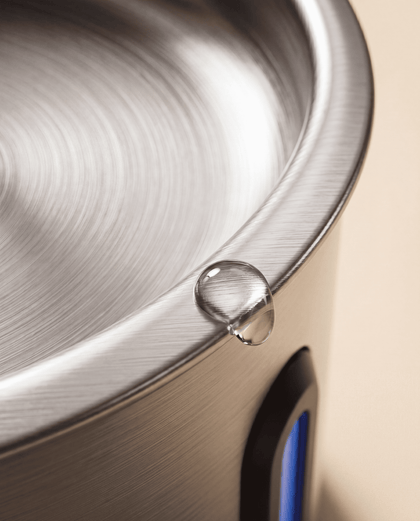
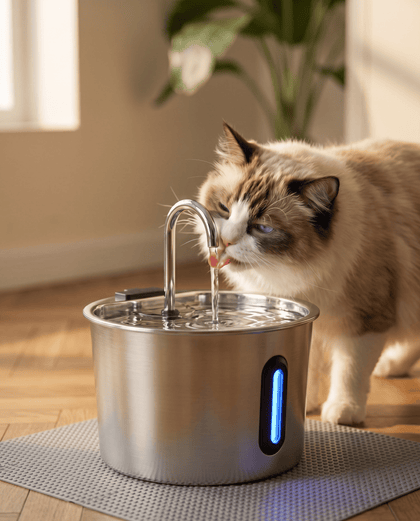
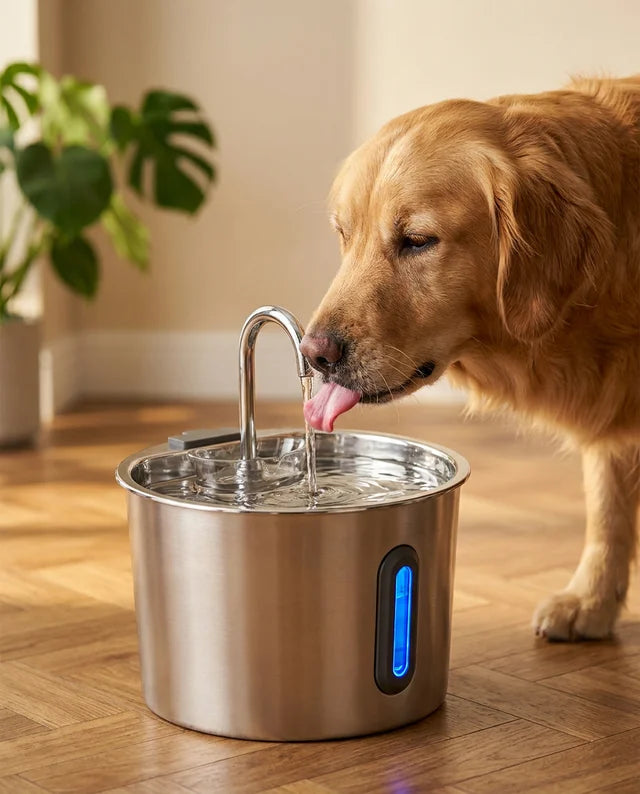
Pawdrop keeps water moving, filtered and ready for daily use.
Shop the Pawdrop FountainWhy dogs become dehydrated
A dog's water needs rise quickly. With warm weather, after exercise, with age, after a salty meal, or simply in a stuffy flat on a summer afternoon. Puppies and older dogs are especially vulnerable; so are smaller breeds, whose margins are thinner to begin with.
Often the issue isn't that water is unavailable. It's that the water on offer is unappealing — warm, stale, dust-flecked, sitting in the same bowl since morning. Dogs drink less from water that's gone flat, just as we'd reach less often for a glass left out overnight.
The signs worth knowing
Dehydration rarely announces itself. It's worth knowing what to look for.
The skin test. Gently lift the skin between your dog's shoulder blades and let it go. In a well-hydrated dog, it springs back instantly. If it settles back slowly, that's a sign to take seriously.
The gums. Healthy gums are moist and slick. Dry, tacky gums suggest your dog needs water.
Energy and appetite. A subtle dip in enthusiasm, a slower walk, less interest in food — these quiet changes can all trace back to hydration.
Thick saliva, sunken-looking eyes, or heavy panting unrelated to heat are all signs to act on promptly.
When to see a vet
Mild dehydration can often be corrected with fresh water and a calm rest. But if the skin test is clearly delayed, if your dog seems lethargic, is vomiting, or refuses water altogether, contact your vet without delay. Dehydration can escalate quickly, and anything beyond the mild and short-lived should always be guided by a professional.
This article is a starting point — not a substitute for veterinary advice.
The simple daily habit
Most everyday under-hydration is solved long before it becomes a concern, with one small change: make the water genuinely inviting.
Fresh, cool, moving water encourages dogs to drink more often and more willingly. A circulating fountain keeps water oxygenated and filtered throughout the day, rather than letting it sit and stale in a bowl. Cool water is more appealing in warm weather; filtered water simply tastes better.
It's a small, quiet piece of preventative care — the kind that asks little of you and gives a great deal back.
Pawdrop was built for exactly this: water that stays fresh, moving, and clean all day, for the dogs (and cats) who depend on us to think ahead.
Hydration is one of the simplest things we can get right for them. It's also one of the most important.