You fill the bowl. Fresh water, clean ceramic, set down in the same place every morning. And every morning, your cat walks past it — pausing only to investigate a drip from the tap, or the condensation on a glass you've left out.
It isn't fussiness. It's instinct.
Fresh water they actually want to drink.
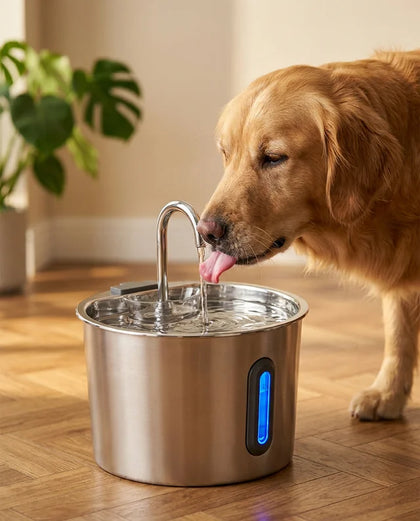
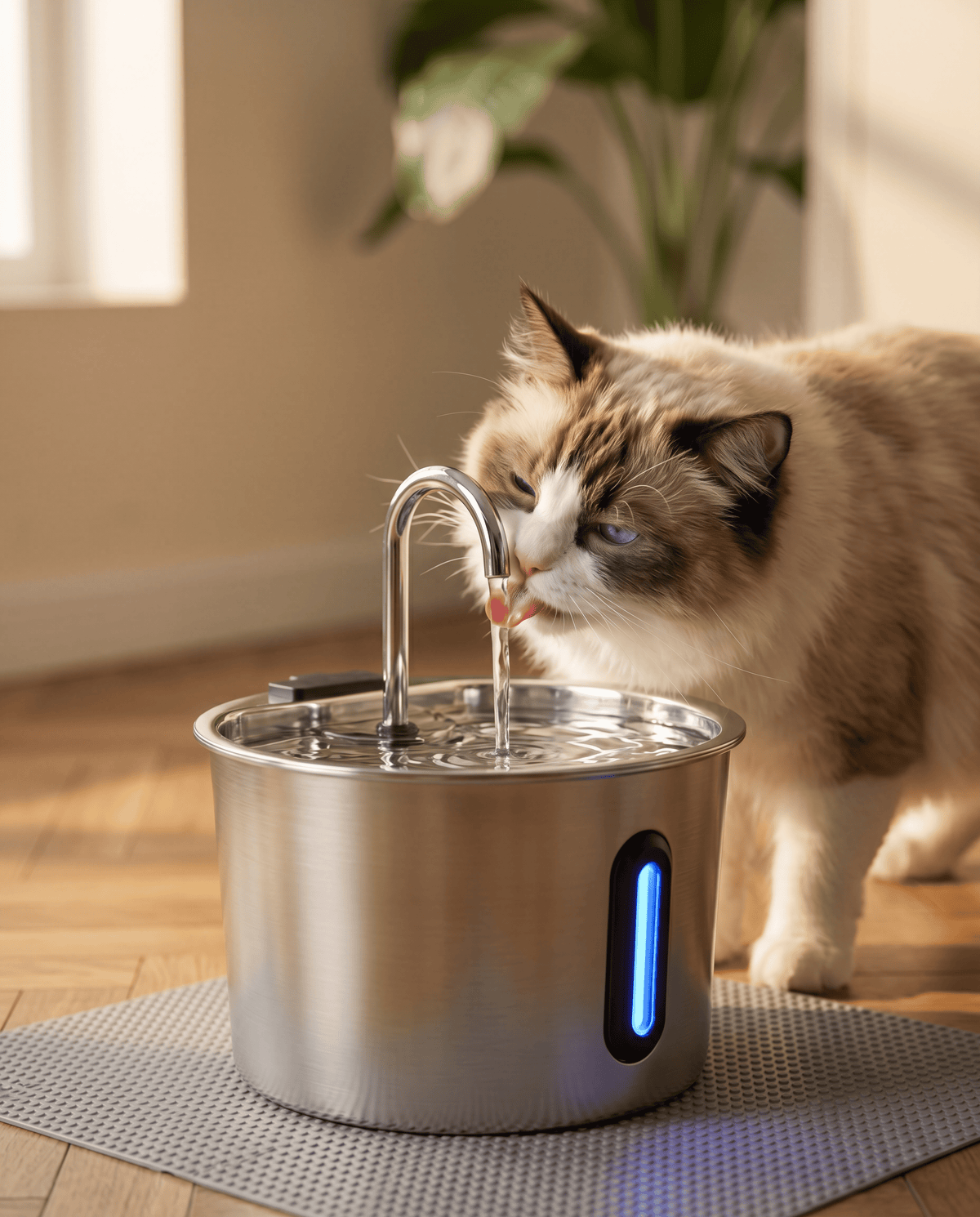
Pawdrop keeps water moving, filtered and ready for daily use.
Shop the Pawdrop FountainThe wild origin of a modern habit
In the wild, still water is a warning sign. A pooled bowl, untouched and motionless, is more likely to harbour bacteria, parasites, or the lingering scent of another animal. Moving water — a stream, a trickle, fresh rainfall — is fresher, safer, and far more appealing to a creature whose survival depended on reading water correctly.
Domestic cats have inherited that wisdom in full. Even in the comfort of a London flat, a cat reads a still bowl the way their ancestors read a stagnant pond: with quiet suspicion. It's why so many cats prefer the running tap, the watering can, or the rim of a glass — anywhere water moves, anywhere it feels alive.
They're not being difficult. They're following millions of years of evolutionary instinct.
Why this matters more than you'd think
Cats are not naturally enthusiastic drinkers. They evolved in arid environments and historically drew most of their moisture from prey. A modern diet — especially one centred on dry food — leaves a real hydration gap, one your cat is rarely motivated to close on their own.
When they avoid the bowl, that gap quietly widens. Chronic under-hydration in cats is widely associated with urinary tract issues, kidney strain, and a slow dip in general vitality. The signs are subtle: a slightly duller coat, a touch less energy, fewer trips to the water than you'd expect.
Most owners never notice. Until a vet does.
The simple change
The solution isn't to coax a reluctant cat into drinking more. It's to offer them water their instincts trust.
A circulating fountain keeps water moving, oxygenated, and continuously fresh. To a cat, this reads as safe — and they drink accordingly. Vets and owners consistently observe that cats drink noticeably more from a fountain than from a standing bowl. The water tastes better, too. A good fountain quietly filters out the sediment, hair, and chlorine that build up in a bowl left out all day.
Fewer reasons to say no.
What to look for in a fountain
Not all fountains are created equal. Many of the cheaper ones hum loudly enough to startle a sensitive cat, undoing the entire premise. Plastic fountains also harbour biofilm — that faint, slippery bacterial layer that forms in tiny scratches and gives water an off-taste your cat notices long before you do.
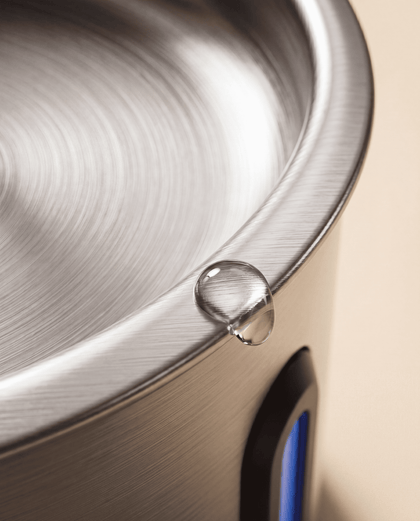
The better answer is stainless steel: hygienic, taste-neutral, and quiet. A whisper-quiet pump means your cat encounters the water — not the machine humming under it.
Pawdrop was designed around exactly this instinct: fresh, moving, filtered water, in a fountain quiet enough to forget and beautiful enough to keep on display.
Your cat already knows what good water feels like. Sometimes, all we have to do is offer it.